Two Different Types of Problems
As a reflective pastoral supervisor and as a coach, I work with pastors who usually present ministry problems. Things like working with members of the congregation, finding joy in ministry, creating annual goals, etc. An issue is presented and as the person is speaking, I start sorting out the type of problem it is. Is it a technical problem or an adaptive problem?
The initial question might be- aren’t all problems just problems? Well, no and this is where lots of clergy (and others) run into big messes. The primary way of making a mess is to treat an adaptive problem as if it were a technical problem. One takes a lot of time, transformation, and change. The other requires a simple solution and things can get solved. Let’s take a look at each.
A technical problem is one where a solution can be found, it can be implemented, and then the problem is solved or goes away because of the solution. An example might be, beginning a new Bible study class. To start a new one, it is a matter of finding a time to meet that works for everyone, a topic to teach, and a method to teach it- is it in person, online, etc. There is a problem, a solution, an implementation, and possibly an evaluation- did the Bible study work, did people enjoy it, did the day work, etc.
Technical problems are straightforward, they can be worked through, and have one or two solutions that can be done.
On the other hand, there are adaptive problems. These take time because often they require a culture shift in the system or a shift in a relationship. There usually isn’t a simple solution, but lots of variables have to looked at, such as how many people will be affected, what is the relationship to the whole, how much time is needed, is the problem a systemic problem, etc?
Adaptive problems cannot have a single solution that makes everything fall into place. There are usually people that will need to be contacted or allies that will be need to put into place before implementation. Feelings of the heart and relationships will need to be examined, as it cannot be a simple solution that can be thought through. Adaptive problems need time and lots of energy.
The issue for many clergy I coach or supervise is when an adaptive problem is treated as if it were a technical problem. A simple solution is created to a big issue, which usually gets a lot of pushback or anger. The pastor is at a loss as to what happened and continues to look for solutions to “fix” the new problems.
An example of an adaptive problem that can be treated as a technical one might be the desire to change a church service time for the foreseeable future. This is completely an adaptive problem and I will go into why in just a moment. If I were to treat this as a technical problem though, the simple solution is to announce to the congregation that the church time is changing, change the time, and it is done. I can imagine some are laughing right now because they know this is not what will happen. What will more than likely happen is people will get upset, some might leave the church to find another church, or some might stop giving until the service is changed back. A small percentage might not care and will continue to come wondering why everyone else is upset.
The reason for the reaction is adaptive problems don’t have technical solutions. Changing a church time is a “holy cow” of sorts, meaning there is a lot of emotions, connections to history, and individual routines that will be affected by such a change. People have brunch and family routines, perhaps the church has always had service at 9AM and therefore it is a Sabbath time for individuals who attend the church, or people like the 9AM time and it means something to them. These are all things that will need to be weighed and considered when looking at this problem.
So, how might one go about looking at this through the eyes of an adaptive problem. The first thing one might do is get some buy in- do a poll, see if people desire a time change, explain timing issues if there are any, and get other support from members of the congregation. Once a discussion is had, perhaps test a time change for one week and see what kind of response you get. Another idea might be change it for just a season, such as the summer, when attendance is lower anyway and get feedback. There may be a whole bunch of things that need to be done prior to coming to a consensus in the congregation that a service time change is the best path forward. One may also hear that it doesn’t work for anyone, so it would be back to the drawing board.
Adaptive problems take time to create ideas and solutions. They usually have to take in people’s feelings and emotions, which technical problems usually do not have to do. Adaptive problems need allies and support as one person cannot do it alone. There has to be discussion, testing, and ideas. Pastors get into a lot of hot water and usually create more problems for themselves when adaptive issues are treated as technical ones.
Where have you experienced adaptive problems? Have you ever made the mistake of treating an adaptive problem as a technical one? What was the outcome like? This is where coaching or supervision can come in handy as one explains a situation. A coach can pick up whether it is a technical problem or an adaptive one and help you journey down a path to recognizing the difference. Drop me a line if you would like to start a coaching or supervision relationship.
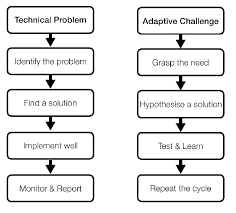
An image showing the difference between a technical problem and an adaptive one.
If you would like to support my writing, you can help through Cash App at $nerdyrev or Venmo at nerdyrev